AI now generates designs faster than any team can create. Variations, layouts, color schemes, content blocks — all are available to UX professionals within seconds. What hasn’t accelerated is the work of knowing which of those variants are right for the real-world, the people who will use the product. That work is older than any tool, and it has only become more valuable as everything around it has gotten faster. User-centered design is the discipline that holds the fort on this. It places the people who use a product, including their needs, their behaviors, and their constraints, at the center of every design decision.
Stuti Mazumdar & Vidhi Tiwarii - July 2024
What is User-Centered Design?
User-centered design is a creative problem-solving approach that places the user at the center of any product design process. Unlike methods that prioritize aesthetics or technical specifications first, it starts by understanding the actual people who will use the product, their goals, their constraints, and the user problems that the product is meant to solve.
The core principle is simple: build a product that people would love to use. To get there, UX designers have to first understand the target audience. That means conducting real research, including interviews, observation, surveys, and/or behavioral analysis, and gathering insights from how people experience the product and competitive tools, and iteratively refining the work based on what users actually do. By following this fundamental framework, UX designers can build products that are not only usable but genuinely desirable. Design solutions that emerge from this approach tend to outlast the ones built on assumption; they hold up because they were built around evidence in the first place.
What does the User-Centered Design Process Look Like?
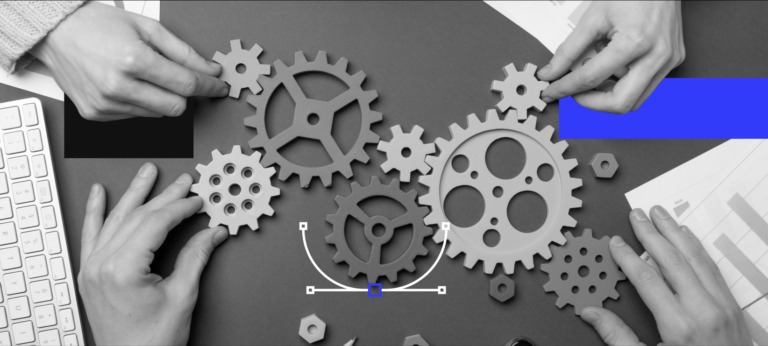
The product design process under user-centered design is structured around six stages. Each stage matters; skipping or rushing any of them tends to surface in the final product.
1. Empathize
The team works to understand users’ needs, experiences, and emotions. Methods include user interviews, contextual observation, and immersive research that puts the team in users’ shoes. Deliverables: empathy maps, personas, and journey maps that capture users’ perspectives and pain points.
2. Define
Armed with research, the team articulates the problem worth solving. The output is a clear problem statement or point of view that guides everything after. This is where AI synthesis tools have started to help, accelerating pattern recognition across interview transcripts and survey data, though the judgment about which patterns matter still belongs to the team.
3. Ideate
The team generates a wide range of ideas. Brainstorming sessions, sketching, and structured ideation techniques explore the solution space. The goal isn’t the best idea on the first try; it’s a broad enough range that the right one becomes visible.
4. Prototype
The team builds tangible representations of ideas through the use of low-fidelity sketches, models, and interactive wireframes to test feasibility and usability. Prototypes get refined based on early user feedback before any production work begins.
5. Test
Usability testing with real users validates the prototypes. Teams learn what works, what confuses, and where users get stuck. Feedback gets documented thoroughly so nothing important gets lost in the handoff.
6. Implement
The team works with product development to build the final product, holding the design intent through engineering trade-offs. Final rounds of testing and quality assurance happen before launch.
What are the Guiding Principles of User-Centered Design?
User-centered design works on four guiding principles.
1. Be people-focused
This places users at the heart of every design decision. It means understanding their needs, behaviors, and pain points through direct engagement. By building genuine empathy and an emotional connection with users, designers create products that resonate on a personal level. The principle underscores the essence of the discipline: designing for people, with people in mind.
2. Identify and tackle the right problem
The success of any digital product depends on whether it’s solving the right problem in the first place. There’s a temptation to address symptoms rather than root causes. This principle calls for a thorough problem-stating process, investing time in understanding context and underlying factors before defining the problem statement. Solutions that address the real issue save time, save resources, and provide genuine value to users.
3. Iterate and experiment
No first solution is the best one. The principle calls for a cycle of prototyping, testing, and refining — continuous learning that brings the team closer to an optimal solution with each iteration. Experimentation surfaces ideas the team wouldn’t have reached by sticking with the first viable answer.
4. Consider everything as a system
Products designed well don’t exist in isolation; they sit inside ecosystems of users, environments, technologies, and social contexts. Understanding how the different components interact lets the team anticipate challenges and opportunities, and create solutions that are sustainable and adaptable to changing conditions.
Why does User-Centered Design Matter for Product Success?
The discipline continues to be adopted by large-scale organizations and enterprises globally for a reason. The benefits compound across product development, user satisfaction, and market success.
1. It enhances user’s experiences
By centering on real users’ experiences across the product, user-centered design builds intuitive interfaces and journeys. Products that feel easy to use earn higher engagement and longer-term loyalty.
2. It increases market success
Teams that specifically design around real user problems build products that perform better in the market. By addressing what users actually need, these products attract and retain customers without relying on heavy acquisition spend.
3. It fosters innovation throughout the design framework
The iterative nature of user-centered design encourages experimentation. By prototyping and gathering feedback, teams explore a range of ideas and uncover novel design solutions that wouldn’t have surfaced in a more linear process. The culture of iteration creates room for innovation that’s grounded in evidence, not novelty for its own sake.
4. It reduces risk
Involving users early and often surfaces issues before they become costly. Early testing reveals usability problems, design flaws, and overlooked obstacles. Catching these in the prototype stage — instead of after launch — prevents the expensive redesigns that follow most reactive development. The approach minimizes the risk of shipping a product that doesn’t meet user expectations or market demand.
5. It builds brand loyalty for your organization
When users feel a product was built with their needs in mind, they develop a stronger emotional connection with it. Good product design that consistently delivers becomes the foundation for word-of-mouth growth; users advocate for products that understand them, and that advocacy is one of the most durable forms of growth a business can build. Loyal users also help improve the quality of the entire experience over time by providing the most useful feedback.
How does User-Centered Design Fit in an AI-Driven World?
This is the question that has reshaped the discipline in recent years. AI tools can generate a wider range of design options, faster, than any team could on its own. They’ve made parts of the product design process meaningfully more efficient — synthesis at the empathize stage, ideation acceleration, prototype generation, even some test analysis.
What AI hasn’t done is replace the judgment about which design solutions are right for the actual user. That judgment is a human contribution. Choosing which user problems are worth solving, deciding which behavior the product should respond to, weighing trade-offs that affect real users — these are the moves that determine whether a product gets used or gets ignored. They depend on human understanding of context, ethics, and lived experience that machines don’t carry. This is why user-centered design matters more now, not less. Execution speed has been democratized, but design judgment has not. The teams that hold the discipline of starting from real users and tracking how users interact with what they build are the ones whose products feel intentional in a market where everything else looks similar.
“In two decades of this work, I've watched user-centered design get treated as everything from a phase to a philosophy. The teams who built it into how they think are the ones whose products are still being used when AI starts generating alternatives.” — Deepali Saini | CEO at Think Design Collaborative
User-centered design isn't a methodology you apply at the beginning of a project and check off. It's a philosophy that shapes every decision, from which research questions get asked to which features ship, to how the team responds when launch metrics don't match expectations.
By treating empathy with users as a principle rather than a phase, teams create products that don’t just solve problems; they enrich how people live and work with technology. As the tools around design keep evolving, the discipline of staying centered on real human needs becomes the thing that separates a product from a product worth returning to.