Stacked Bar Chart

Stacked charts are a type of bar chart where multiple series are placed atop one another. This allows comparison of category totals while also showing how subcategories contribute to the whole—either in absolute terms or as a proportional stacked bar chart.

Quick details:

What

Discover proportion, rank, and composition through clear stacked bar chart interpretation

Why:

Compare category totals and subcategory contributions in a single view (a cumulative bar graph perspective)

History of Stacked Bar Chart

Stacked bar charts evolved from early bar charts popularised by William Playfair. Over time, they expanded into more complex forms such as grouped and stacked bar chart variations to handle multi-dimensional comparisons.
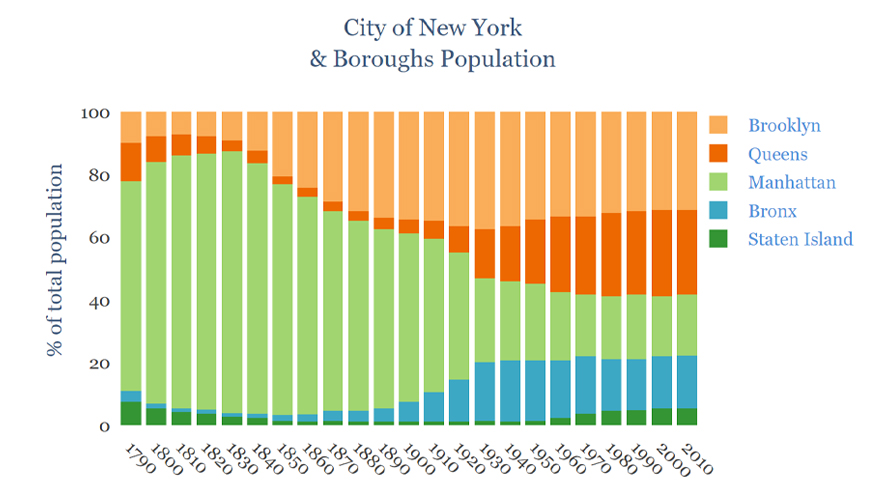
Stacked bar chart
The stacked bar charts not only allow us to see the category totals first but also get a rough yet helpful understanding of the item level within each category.

Source

When to Use a Stacked Bar Chart?

1

Compare category totals and subcategory contribution

Use stacked bar graphs when you need to understand how parts contribute to a whole across multiple categories.
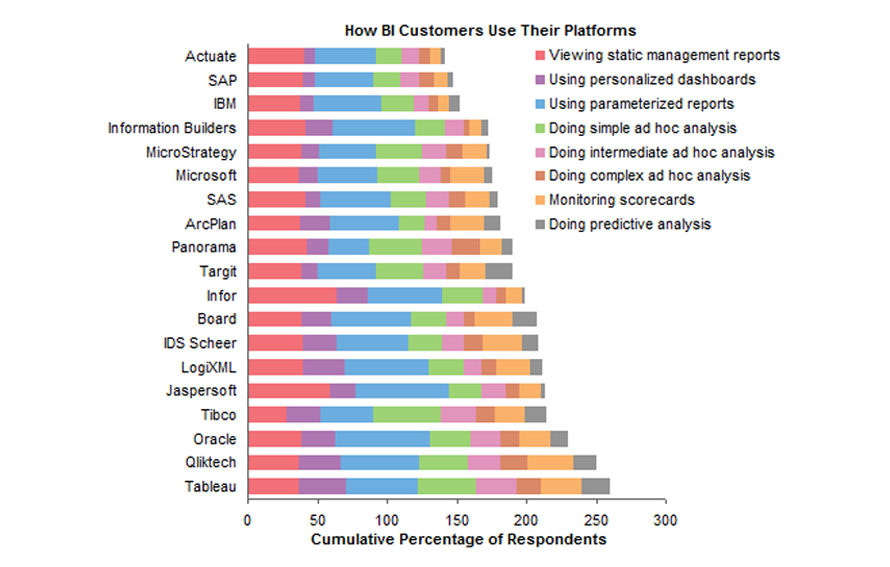
Stacked bar chart
Simple Stacked Bar Chart comparing BI customer usage across different technologies and criteria

Source

2

Compare relative proportions across categories

100% stacked charts help analyse proportional differences between groups, making them ideal for part-to-whole comparisons.
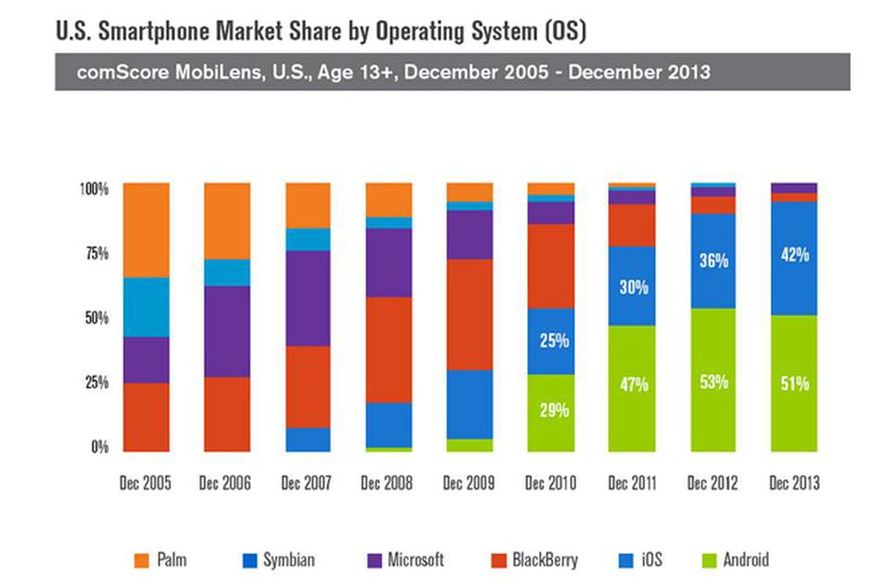
Smartphone Usage in USA: Stacked bar chart depicting OS differentiation.
A percentage Stacked bar chart showing comparison of smartphone market across different years for different players

Source

3

Simplify dense grouped comparisons

When grouped charts become cluttered, stacked bars offer a cleaner way to compare totals and internal distributions simultaneously.
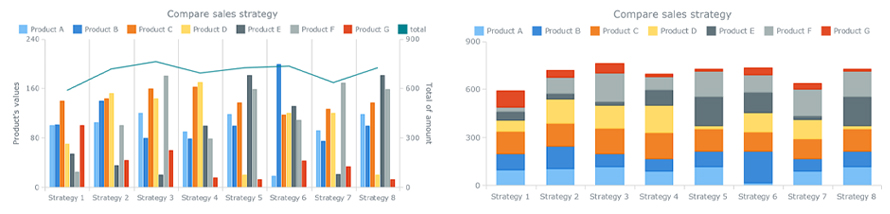
Stacked Bar Chart: Depicts data distribution over time, emphasizing key trends for insightful analysis
A comparative view of the group and stacked bar charts. A stacked bar chart can showcase that strategy 6 is the best for product B more quickly that one can determine it using the group bar chart

Source

Types of Stacked Bar Charts

1. Simple Stacked Bar Graphs

Shows absolute values, where each segment contributes to the total bar height.

2. 100% Stacked Bar Graphs

Normalizes values to percentages, making it easier to compare relative proportions across categories.

When Not to Use a Stacked Bar Chart?

1

Too many segments

Too many segments reduce readability and make comparisons difficult.

2

Precise comparisons between subcategories

Since segments don’t share a common baseline, comparing them accurately is harder—consider alternatives or refer to clearer stacked bar graph examples for guidance.

Share on

Was this Page helpful?

Get in Touch

Partner with us to bring your ideas to life.

Thank you for your feedback.