Our Strategy
The Thinker Approach
At the start of the engagement, we centered the design process around the users – employees, managers, and HR leaders who would interact with the platform daily.
Through collaborative stakeholder workshops, we aligned the perspectives of business, technology, and user experience.
This alignment helped define a clear product vision and ensured that the platform addressed organizational goals while meeting employee expectations.
Our approach emphasized exploration and iterative design thinking. Rather than starting with predefined solutions, we explored possibilities through ideation, prototyping, and rapid iterations. This allowed creativity and user insights to drive decision-making throughout the product development process.
The goal was to create a scalable employee engagement platform design that could adapt to different organizational contexts while maintaining a consistent and engaging user experience.
Insights We Drew/ Insights Inferred
Early research revealed a fundamental paradox: employee engagement platforms are designed to increase engagement, yet many fail to motivate employees to participate. In many organizations, such systems are perceived as another internal IT tool rather than a platform that genuinely adds value to employees’ daily work lives.
To address this gap, we focused on understanding how employees interact with workplace platforms and what motivates them to participate consistently.
Our research highlighted the need for a platform that feels intuitive, visually engaging, and aligned with employees’ mental models.
It also became clear that the interface needed to reduce complexity while making key actions – such as feedback, recognition, and goal tracking – simple and accessible.
These insights guided the creation of an experience that prioritizes usability, clarity, and flexibility, ensuring that engagement becomes a natural part of everyday work interactions rather than an additional task.
Key Strategic Interventions
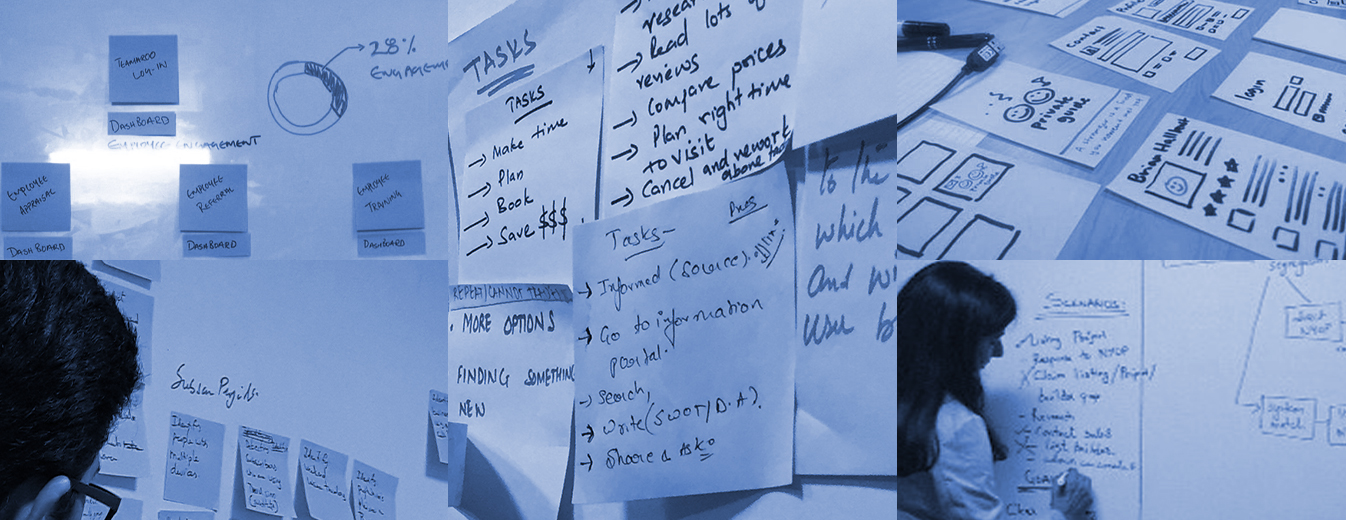
Stakeholder Alignment Workshops
Conducted collaborative workshops to align user needs, business goals, and technological capabilities while defining the platform vision.
User-Centered Design Framework
Placed employees at the core of the design process to ensure the platform addressed real user motivations and workplace behaviors.
Exploratory Ideation and Iteration
Adopted an iterative design thinking process where concepts were explored, refined, and validated through continuous prototyping.
Scalable Platform Architecture
Designed the product to support diverse organizational structures and workflows while maintaining a consistent engagement experience.
KEY FEATURES
01
Card-Based Interface Design
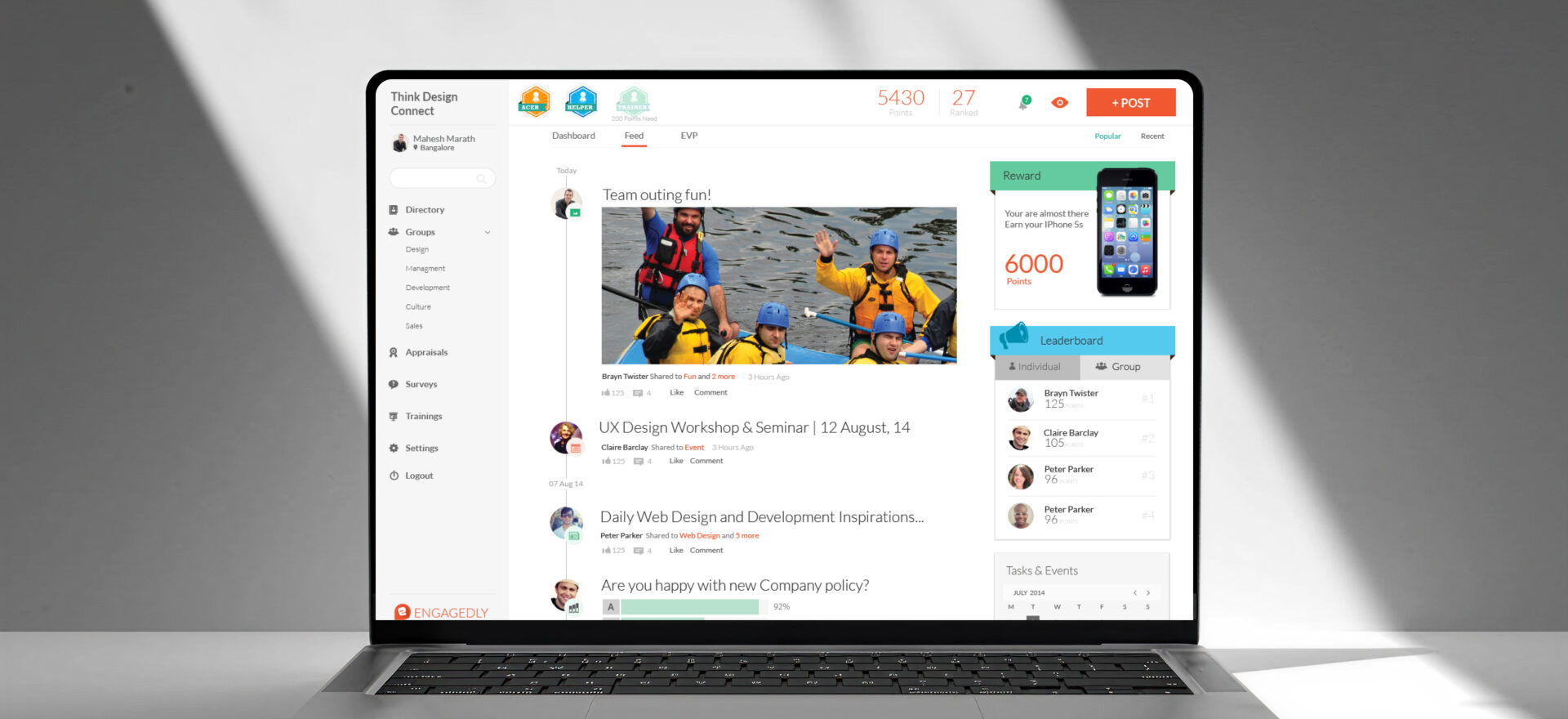
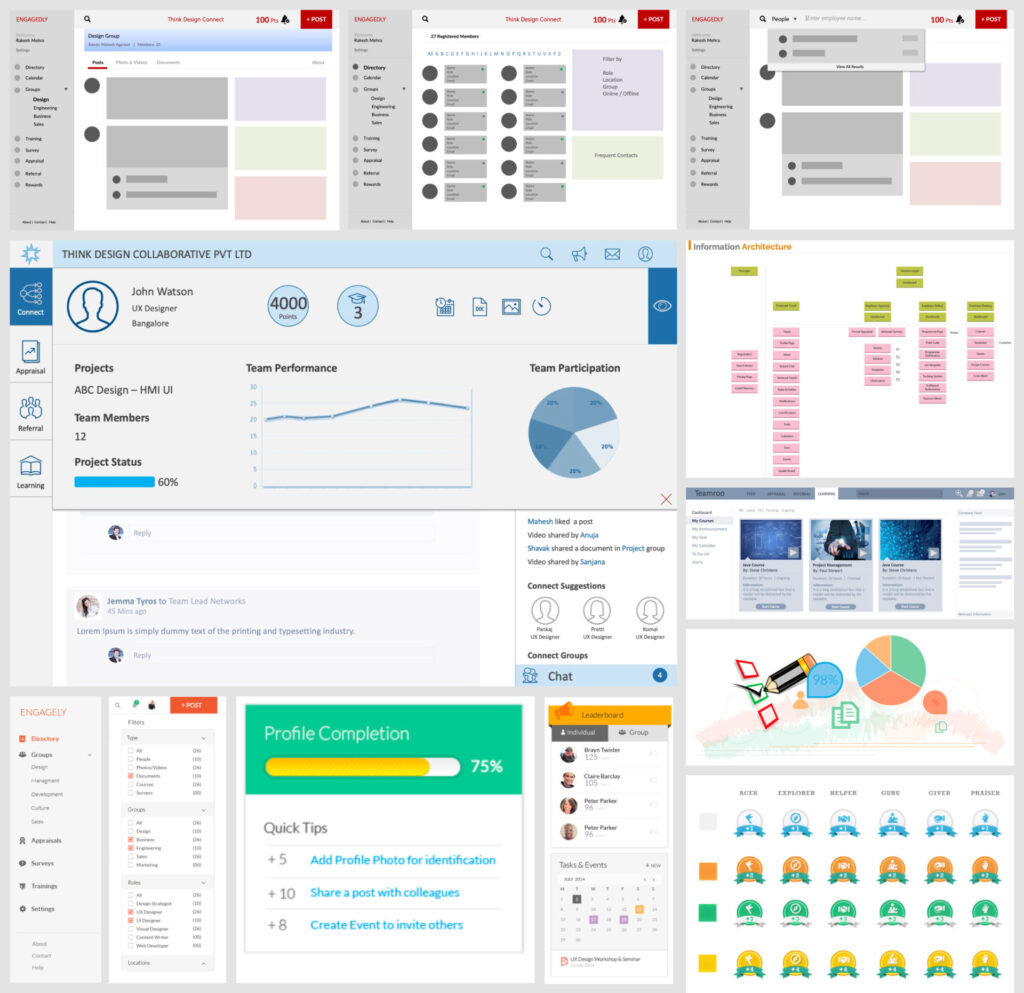
Inspired by modern touch interfaces, the platform adopted a card-based design system that organizes information into modular components, guiding interactions and storytelling within the interface.
02
Intuitive Information and Interaction Design
Information architecture was structured around user mental models, allowing employees to easily access engagement activities, feedback tools, and performance insights.
03
Touch-Friendly and Scalable Experience
The interface was designed to support touch-based interactions and responsive layouts, enabling seamless use across future mobile applications and devices.
04
Flexible Visual Design for White-Labeling
The visual language combined vibrant design elements with a neutral palette, allowing organizations to easily adapt the platform to their own brand identity.
DESIGN ACTIVITIES
Stakeholder
workshop
Market study
Secondary
research
Ideation and
Wireframe
Interaction
design
Visual design &
Visual system
Front end
Development
Product Impact & Outcomes
Engagedly was launched in 2015 and has since been successfully deployed across organizations in multiple geographies. The platform continues to support companies in building stronger employee engagement practices and improving workplace collaboration.
By focusing on intuitive experience design and user-centered interactions, the project demonstrated how thoughtful employee engagement platform design can transform internal systems into meaningful tools that employees actively use and value.