Our Strategy
The Thinker Approach
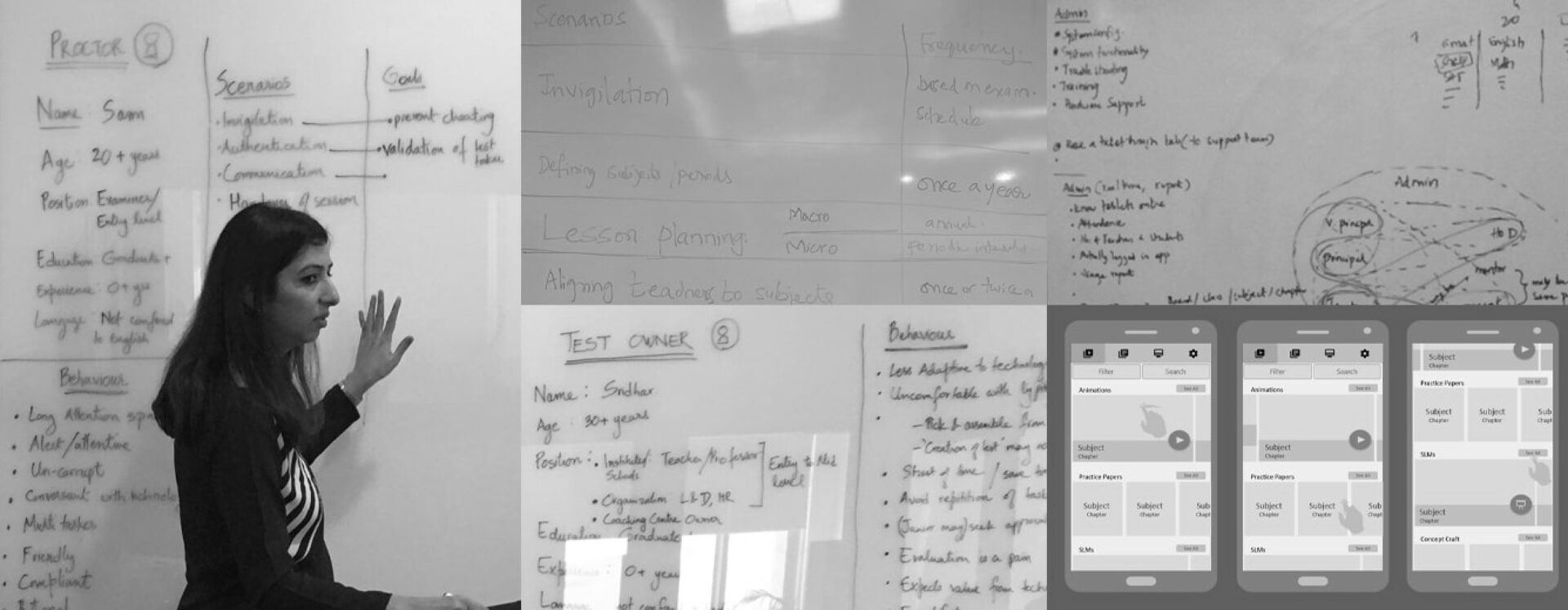
We began by aligning product leadership and stakeholders around a shared vision for the learning ecosystem. A multi-day Insight and Strategy workshop helped map the relationships between different user groups and the touchpoints through which they interacted with the platform.
Students, teachers, parents, and administrators engage with the system in very different ways. Understanding these roles and their goals helped define a coherent product structure.
Rather than approaching the engagement as a surface-level redesign, the focus was on building a foundation for a scalable experience – one that could unify multiple products and enable consistent interaction patterns across devices. The resulting framework guided the platform’s evolving edtech platform UI UX design across web, mobile, and classroom environments.
Insights We Drew/ Insights Inferred
Digital learning platforms must reconcile two distinct challenges: pedagogical depth and product usability. While content and functionality grow rapidly in such ecosystems, the experience often becomes fragmented as new modules are layered onto the platform.
Our research revealed that many workflows were built around internal system logic rather than user mental models. Teachers needed clarity while managing classrooms, students needed intuitive access to learning material, and parents needed simple visibility into academic progress.
The opportunity lay in structuring the platform around real learning journeys – making it easier to navigate complex educational tasks without adding cognitive load. This insight informed a design approach that prioritized clarity, consistency, and intuitive workflows across the ecosystem.
Key Strategic Interventions
Unified experience framework
Established a consistent interaction and visual design language across the Extramarks ecosystem.
User-centred information architecture
Reorganized features and content around the goals of teachers, students, parents, and administrators.
Workflow rationalization
Simplified core journeys such as classroom management, assignments, and communication.
Cross-platform design consistency
Ensured a seamless experience across classroom tablets, mobile applications, and web platforms.
Scalable design system
Developed reusable UI components to support long-term product evolution.
KEY FEATURES
01
Digital Classroom Experience
A 100% digital solution, the Classroom Tablet Program (CTP) primarily connected students with teachers through tablet and whiteboard interfaces, enabling collaborative teaching and learning environment.
02
Integrated Classroom Management
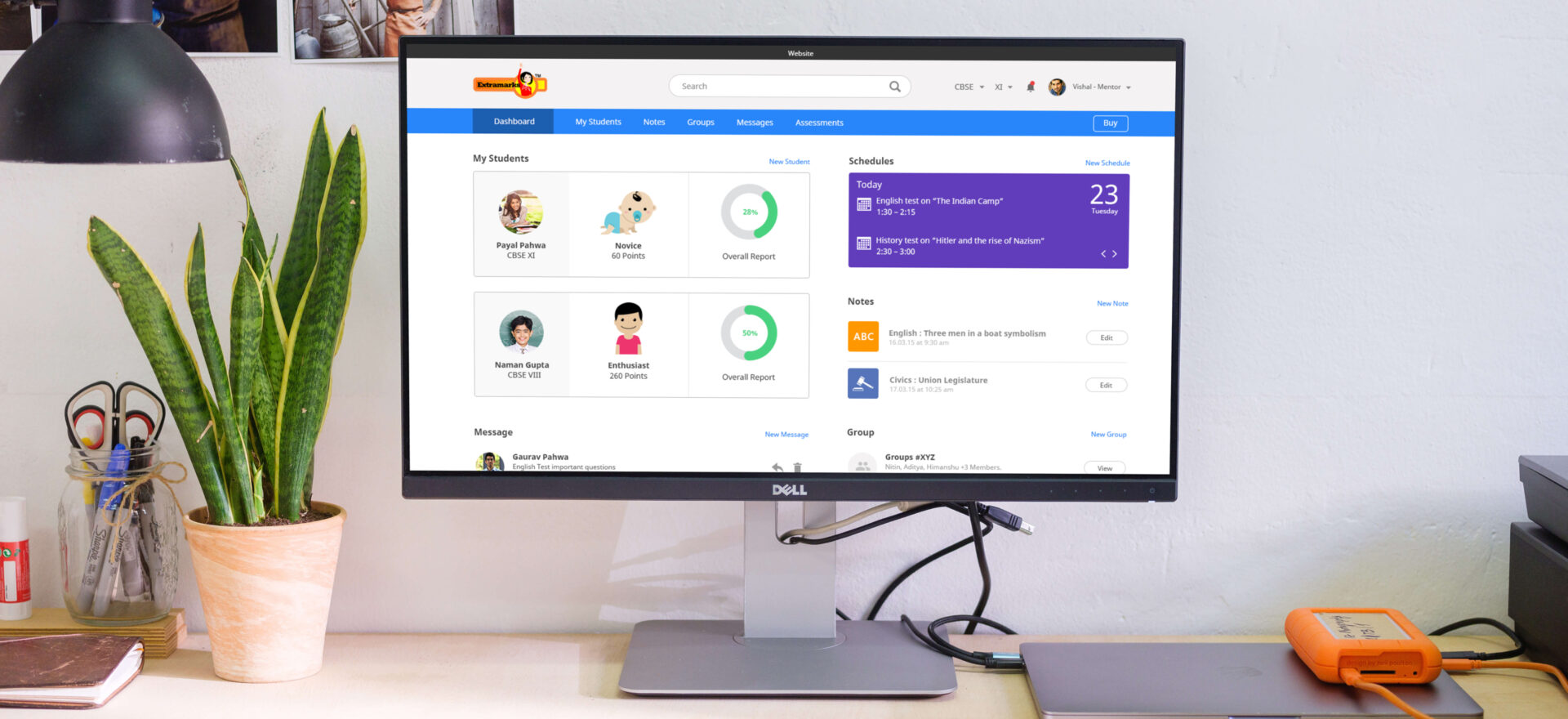
Attendance, assignments, announcements, and study groups redesigned to support efficient classroom workflows.
03
School–Parent Communication
Unified access to calendars, homework updates, bulletins, and school communications for parents.
04
Smart Study Application
A mobile learning environment allowing students to explore content, enroll in modules, and track their learning progress.
05
Unified Web Portal
A responsive portal designed to support Extramarks’ expanding global user base.
06
Integrated Learning Content Hub
Centralized access to study material, reports, notes, and learning resources within a structured interface.
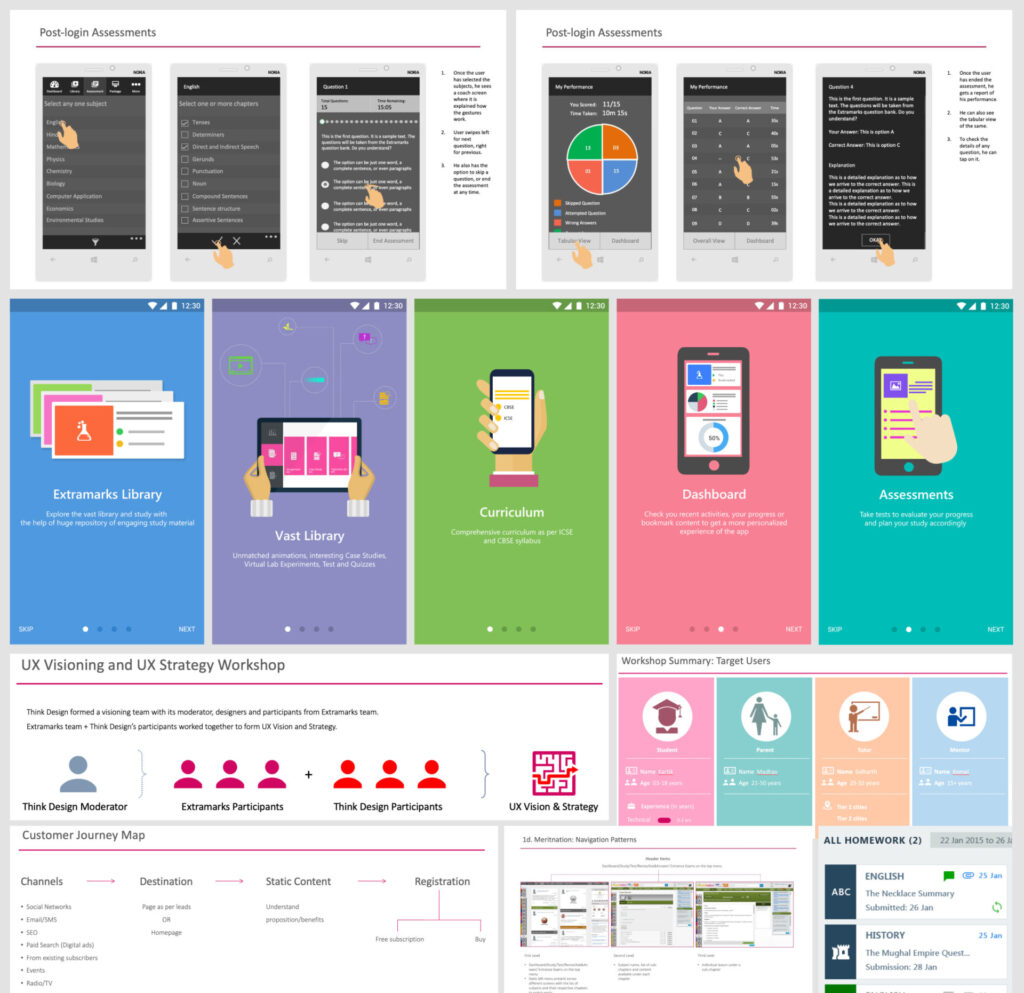
DESIGN ACTIVITIES
Consulting
Stakeholder
Workshops
Wireframing
Prototyping
User Testing & Visual Design
Specifications
Front End
Development
Product Impact & Outcomes
The engagement helped Extramarks transition from a collection of digital products into a cohesive learning ecosystem.
By simplifying interactions and establishing a unified design framework, the platform became easier to navigate for teachers, students, and parents alike. The new experience improved usability while enabling the organization to scale its offerings across devices and markets.
Today, the platform supports learning across 8,000+ schools worldwide, demonstrating how thoughtful edtech platform UI UX design can bring structure and clarity to complex educational ecosystems.