Our Strategy
The Thinker Approach
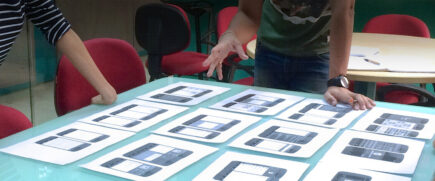
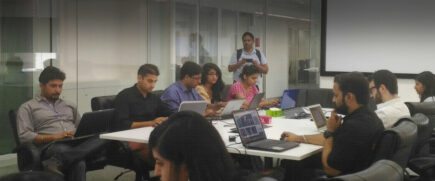
At Think Design, insights drive strategy and design decisions. The project began with collaborative workshops involving the Manorama team to align on product vision, business goals, and user expectations.
The team first focused on understanding the legacy and distinct value of the Manorama Yearbook. This involved studying its position as a trusted information source and evaluating comparable knowledge platforms in the digital ecosystem.
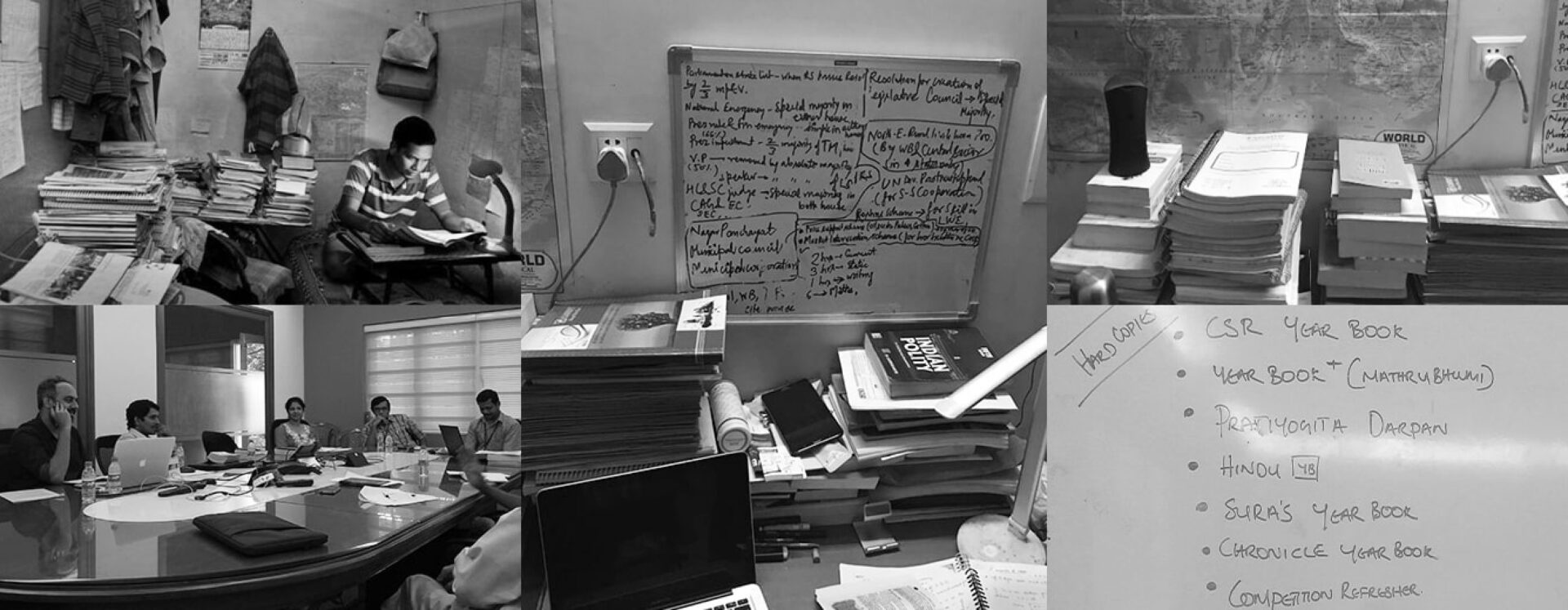
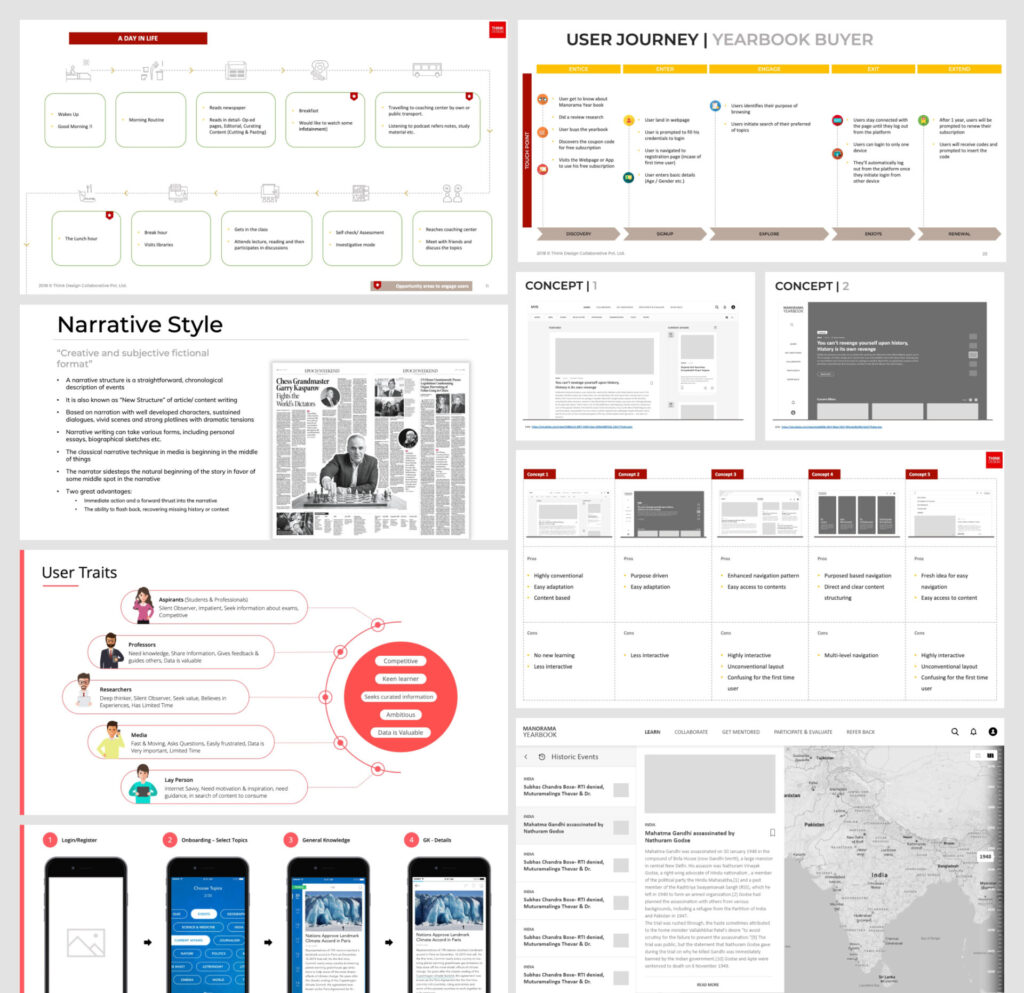
Equally important was understanding the end users. Through user segmentation, two primary personas emerged—UPSC aspirants and quiz enthusiasts. Research methods such as demographic studies, scenario mapping, and “a day in the life” observations helped uncover how learners discover, consume, and retain information during their preparation journey.
These insights helped shape the strategy for building a cohesive digital experience that balances structured information delivery with interactive learning features.
Insights We Drew/ Insights Inferred
User research revealed that aspirants preparing for competitive exams seek platforms that optimize their time and simplify information consumption. Many learners rely on multiple sources—books, online articles, forums, and practice tests—creating fragmented study experiences.
The insights highlighted the need for a single platform that could combine reference material, practice tools, and community engagement.
Learners also showed a preference for concise formats such as bullet points, visual summaries, and timelines that improve comprehension and recall. Additionally, features that allow bookmarking, note-taking, and revisiting key information were found to significantly enhance retention.
These findings guided the development of an integrated digital learning platform UX design that organizes knowledge effectively while supporting different learning behaviors.
Key Strategic Interventions
Stakeholder Vision Workshops
Conducted collaborative sessions with the Manorama team to define the product vision, user segments, and digital strategy.
User Research and Persona Development
Identified primary personas such as UPSC aspirants and quiz enthusiasts through demographic studies, contextual observation, and scenario mapping.
Customer Journey Mapping
Mapped the end-to-end journey from discovery to purchase to identify key touchpoints and opportunities for engagement.
Information Architecture Design
Structured and categorized large volumes of content to enable easy discovery, navigation, and topic exploration.
Unified Design System
Created a cohesive visual and interaction language to deliver a consistent learning experience across devices.
KEY FEATURES
01
Interactive Learning Tools
Features such as cheat sheets, visual mind maps, and infographics help simplify complex information and improve comprehension.
02
Revision and Retention Features
Flash cards, highlights, bookmarks, and note-taking tools allow users to quickly revisit important facts and concepts.
03
Personalized Learning Support
Timetable planners, reminders, and notifications help learners organize their preparation schedules and stay consistent.
04
Community and Collaboration
Discussion forums and mentorship webinars enable learners to interact with peers and experts while sharing insights and strategies.
05
Performance Tracking
Daily quizzes and performance analytics provide feedback on progress and help users identify areas for improvement.
DESIGN ACTIVITIES
UX & Strategy
Workshops
User
Research
Competitive
Analysis
Content
Structure
Audit
Prototyping
Wireframes
Visual
System
Development
Product Impact and Outcomes
Manorama Yearbook Online was launched in December 2018 with a roadmap to launch mobile apps in 2019.
AWARDS

CII Design Excellence Award 2019