For decades, business leaders have obsessed over only one question: how do we shorten the sales cycle for business growth? The obvious answers range from refining outreach tactics to investing in automation, but organizations have tried countless strategies to move prospects from simple inquiries to a decision faster. Yet one of the most powerful levers often remains overlooked—design.
Visual strategy, when complemented by sales and marketing alignment, does a lot more than just make marketing look polished. It can reduce sales friction, qualify leads better, and accelerate conversions, sometimes shortening sales cycles drastically. And the reason is quite simple: design removes room for ambiguity. It makes complex value propositions from your organization easy to understand, provides prospects with tangible outcomes or results when partnering with you upfront, and creates trust at first glance. Driving alignment between the marketing and sales teams directly impacts revenue.
In this blog, we explore why design-sales alignment matters, how it reshapes sales strategy, and what leaders can do to embed it across their organizations.
Stuti Mazumdar - November 2025

How Does Design Shorten Sales Cycles?
The sales pipeline today is more complex than ever. Prospects arrive through multiple channels, including social media, newsletters, referrals, digital ads, webinars, and inbound content marketing. They interact with various team members across the sales and marketing teams, often in real time, before ever speaking to a sales representative. In a way, their experience of interacting with your organization starts before a conversation is even initiated from either end. Here’s where design creates leverage:
1. Clarity of Value
A well-designed pitch deck, holistic product video, or targeted case study can help a prospect understand your solution in minutes, ultimately urging them to book a 30-minute sales call to start a discussion immediately. Meeting your clients where they are is always the best strategy.
2. Consistent Digital Touchpoints
When the marketing team creates polished assets that align with what the sales team is pitching, credibility increases. Prospects sense alignment, and trust builds faster.
3. Building Emotional Resonance
Design doesn’t just present facts; it tells stories visually. Case studies designed with compelling narratives and imagery resonate deeper than plain pitch decks with a client. They allow sales representatives to engage prospects at a human level, addressing their pain points in ways that feel relevant.
Clarity, consistency, and resonance directly influence stages of the sales cycle, ensuring prospects spend less time considering if your organization “is the one” and more time moving toward a decision.
The 4-Step Sales Cycle and Where Design Helps
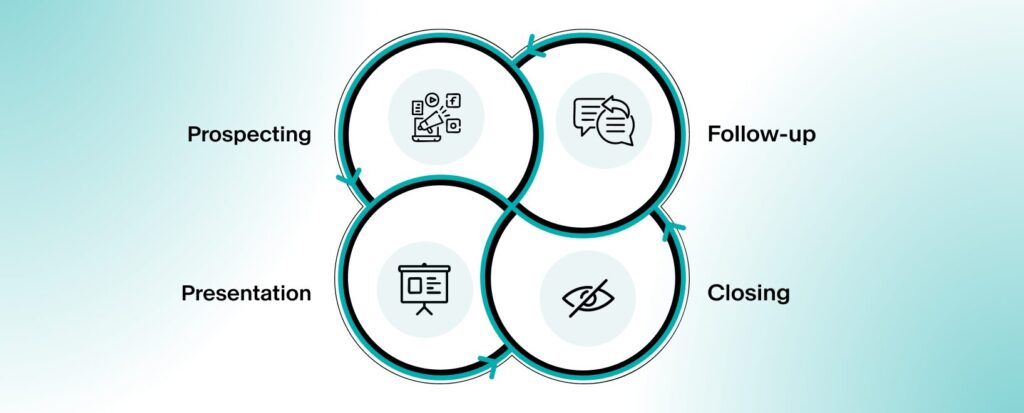
Since we mentioned the sales cycle previously, let’s walk you through it as we understand where and how design fits into it.
Traditionally, the sales cycle is broken into four stages, where each stage brings opportunities for design to accelerate outcomes:
1. Prospecting
Well-designed outreach—whether through social media creatives, landing pages, or targeted collateral—captures attention and qualifies leads faster by speaking directly to pain points.
2. Presentation
Here, design is the biggest differentiator. Your sales team, armed with a compelling deck, product demo visuals, or infographics, can explain complex solutions clearly and keep prospects engaged, moving them faster through the sales pipeline. Invest your time in creating curated assets for every pitch, while maintaining a standardized pipeline in doing so, to ensure you give your sales representatives the best shot.
3: Closing
Building trust is crucial here. Polished proposals, industry research, ROI calculations, timelines, and visually intuitive contracts signal how seriously you are pitching for this project, making it easier to shorten the sales cycle.
4. Follow-up
Thoughtfully designed post-sale materials also help ensure your clientele stays engaged and builds trust in your organization. Onboarding guides, stakeholder discussions, or visually rich reports at regular intervals don’t just reduce churn but also turn customers into case studies that fuel the next round of lead generation. These clients also turn into assets for your organization, boosting word of mouth marketing for you.
Why Sales and Marketing Alignment is Necessary for Faster Sales?
It’s no secret that misalignment between sales and marketing teams can lengthen cycles and stall growth. The marketing team generates leads (as part of the larger acquisition channel), but the sales team may claim those leads aren’t qualified. The result? Lost opportunities, longer cycles, and wasted bandwidth.
A visual strategy creates a shared foundation. When both sides are regularly meeting and brainstorming to co-create assets—sales decks, case studies, offering descriptions, etc.—they establish a common language. Through this, marketing teams gain insight into what prospects are asking at different stages of the funnel, while the sales teams gain tools that are designed specifically to address those recurring requirements.
Together, these regular sales and marketing alignments ensure that leads are nurtured with consistent messaging before they move down the funnel, towards the decision-making stage.
What Should Be Your Visual Strategy Across the Sales Funnel?
Designers’ influence becomes critical as a lead moves down the funnel; hence, a clearer visual strategy must be mapped across the same. Let’s take a look:
1. Awareness Stage
At this point, design focuses on building a relatable brand presence. Social media visuals, explainer videos, and campaign landing pages create a memorable first impression. Using a lot of testimonials and case studies helps.
2. Consideration Stage
Here, pain points take center stage. Prospects are weighing options, and design can make or break this decision. Infographics that simplify complex offerings, in-depth testimonials, and previous work curated for a particular lead embedded in visually compelling case studies can altogether help prospects understand why your solution is the better fit.
3. Decision Stage
At the decision-making point, every detail matters. Is your proposal well designed? Are your contracts clear and intuitive? Is your demo deck visually aligned with your brand? Is the research done as part of the pitch clearly defined through insights and strategy? Sloppy design can make even the best solutions and strategies feel untrustworthy.
Practical Steps to Align Design and Sales
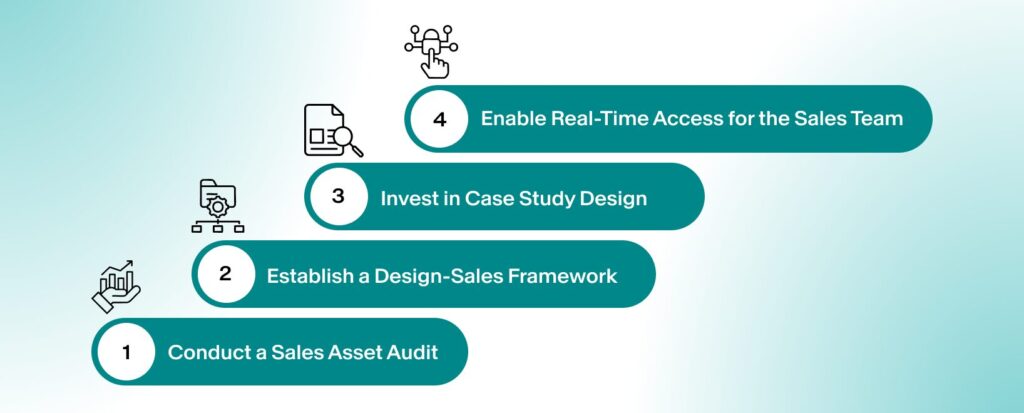
Aligning sales and marketing teams can be a handful. However, here are a few actionables that, when embedded into your framework, can provide a seamless transfer of knowledge between the two:
1. Conduct a Sales Asset Audit
Evaluate all current sales materials, including pitch decks, case studies, offering descriptions, and proposal templates. Are they visually aligned with the brand? Are they scalable to later curate for a particular lead? Do they address customer pain points directly? Are they designed for easy sharing across the stages of the sales cycle? It’s things like this that matter when leads move down the funnel.
2. Establish a Design-Sales Framework
Encourage the sales and marketing teams to host regular meetings. Create a feedback loop where sales representatives report what works and what doesn’t in the field, and designers iterate assets accordingly.
3. Invest in Case Study Design
Case studies are the most powerful tool in the sales process, allowing leads to see your work in action. But too many are generic PDFs simply shared with leads. Transform them into visual stories with bold data points, customer quotes, and graphics that make results impossible to ignore.
4. Enable Real-Time Access for the Sales Team
Sales teams need immediate access to up-to-date visuals. Use centralized internal systems where the sales teams and representatives can instantly pull the latest versions of decks, infographics, or proposal templates. This eliminates the lag between marketing creation and sales usage.