What comes to mind when you think ‘luxury’? Timelessness, craftsmanship, personalization, exclusivity. Now consider experiencing these same qualities as you navigate a digital platform. Six years ago, this seemed implausible. Today, it’s non-negotiable.
Hari Nallan & Mohita Jaiswal - September 2020 | Updated February 2026

Six years ago, traditional luxury brands were still hesitant about digital commerce, fearing counterfeit concerns and believing consumers wouldn’t purchase high-ticket items online. That hesitation has evaporated. The luxury e-commerce market is projected to reach approximately $174.4 billion by 2034, up from $69.1 billion in 2024, with online sales expected to surpass $80 billion in 2025, a dramatic increase from the 8% market share in 2020. *
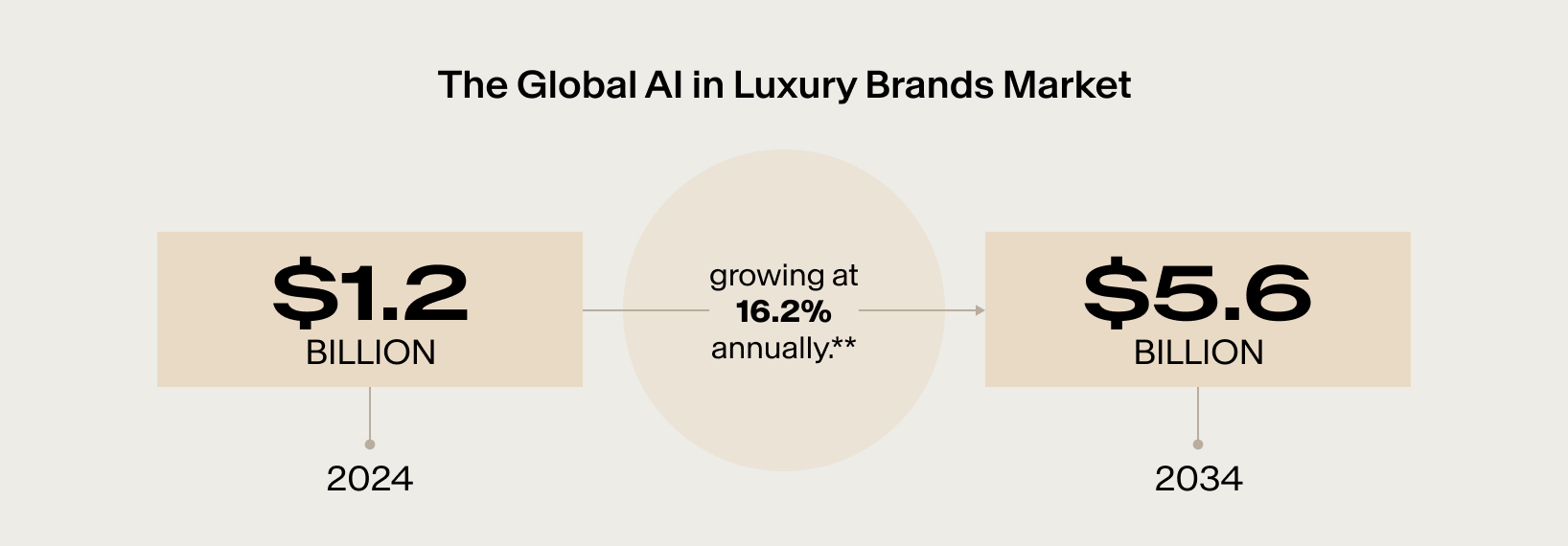
Fuelling this growth, AI adoption in luxury retail is exploding: the global AI in luxury brands market is expected to reach $5.6 billion by 2034, up from $1.2 billion in 2024, growing at 16.2% annually. **
* Source: Market.us Luxury E-commerce Market Towards USD 174.4 billion by 2034, 2025
** Source: Market.us AI in Luxury Brands Market Report, 2025
The transformation accelerated dramatically post-pandemic. Luxury consumers, regardless of generation, now expect sophisticated digital experiences. Gen Z will account for nearly a third of luxury purchases by 2030, while millennials will make over half, and by 2030, Gen Z, millennials, and Gen Alpha combined will represent 80% of global luxury purchases.
Source: Bain & Company, Long Live Luxury: Converge to Expand through Turbulence Report, 2023
These younger luxury consumers behave fundamentally differently than their predecessors. They discover brands through TikTok and Instagram, expect immediate access to product information, and move seamlessly between social media inspiration and purchase. They demand transparency about sustainability and production ethics, and value authenticity over aspiration. For them, digital isn’t a separate channel, it’s the primary lens through which they evaluate, research, and ultimately purchase luxury goods.
The Evolution of Challenges
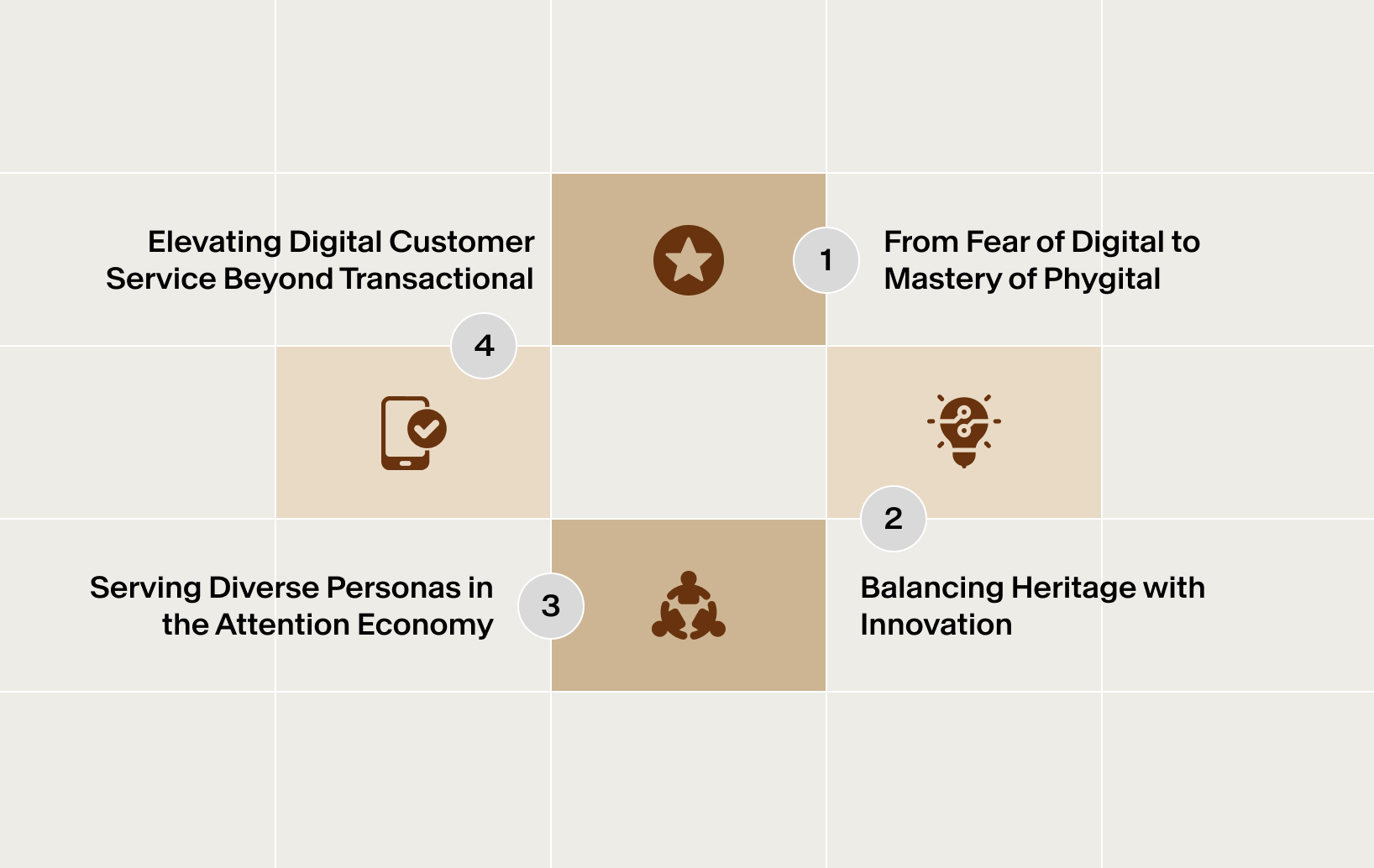
1. From Fear of Digital to Mastery of Phygital
The challenge has shifted. Legacy brands aren’t convincing themselves to go online, they’re racing to integrate physical and digital seamlessly, deploying virtual try-ons, AI stylists, and augmented reality showrooms.
Luxury shoppers increasingly expect AI-enhanced experiences: 57% believe AI improves customer service, according to Forbes. 89% of luxury brands now consider AI essential to their marketing strategies, as reported by Accenture. The message is clear: intelligent, personalized support has become table stakes.
Consideration cycles remain long for high-ticket items, but the research process has evolved. Consumers now expect virtual consultations, 3D product visualization, and AR try-ons before purchase. Brands like Gucci and Burberry have embedded AR features directly into their apps, allowing customers to visualize products in their space or on themselves before buying.
2. Balancing Heritage with Innovation
The tension between branded storytelling and functionality persists, but the bar has risen. Today’s luxury consumers expect both—immersive brand narratives delivered through flawless technical execution. Static product images no longer suffice; shoppers demand 360-degree views, detailed zoom capabilities, styling videos, and user-generated content showing products in real contexts.
The brands winning this balance create editorial-quality content while maintaining intuitive navigation, fast load times, and frictionless checkout experiences.
3. Serving Diverse Personas in the Attention Economy
The three personas—Whales, Middle Class, and Window Shoppers—still exist, but their behaviours have evolved. Gen Z luxury consumers prioritize sustainability, authenticity, and brand values alongside traditional luxury markers. They expect transparency about sourcing, craftsmanship processes, and environmental impact.
According to Deep Market Insights, the global second-hand luxury goods market size was valued at USD 37,800.00 million in 2024 and is projected to grow from USD 40,975.20 million in 2025 to reach USD 61,329.23 million by 2030, expanding at a CAGR of 8.4% during the forecast period (2025–2030).
The rise of luxury resale platforms like Vestiaire Collective and The RealReal has created a fourth persona: the conscious luxury consumer who moves fluidly between primary and secondary markets. The second-hand luxury market has experienced substantial growth, driven by sustainability concerns and value-conscious consumers.
4. Elevating Digital Customer Service Beyond Transactional
The champagne-and-white-sofas experience has found its digital equivalent through AI-powered chat, virtual personal shoppers, and concierge services available 24/7.
The most sophisticated implementations include:
- Live video consultations with in-store experts
- WhatsApp-based personal shopping
- Virtual appointments with artisans and craftspeople
- Post-purchase services including digital certificates of authenticity and blockchain-verified provenance
The goal is replicating the intimacy of personal service at digital scale.
Best Practices for Designing Luxury Digital Experiences in 2026
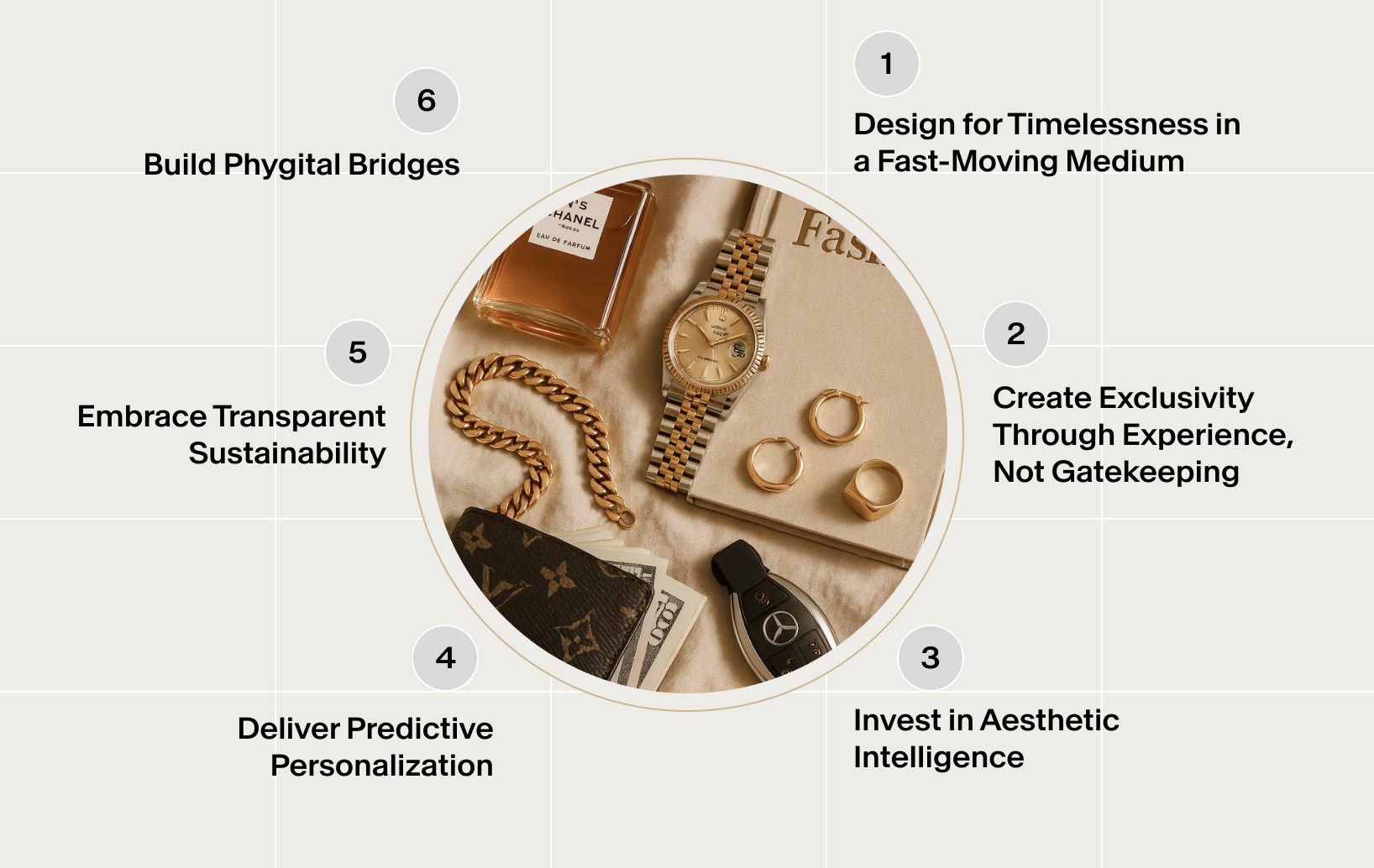
1. Design for Timelessness in a Fast-Moving Medium
Digital experiences must embody brand heritage while embracing contemporary technology. This means:
- Clean, uncluttered interfaces that let products breathe
- Considered animation and transitions that feel refined, not gimmicky
- Typography and colour palettes that honour brand legacy
- Content architectures that prioritize emotional storytelling over transaction
Brands like Hermès and Brunello Cucinelli demonstrate how digital platforms can feel both contemporary and timeless, using restrained design language that mirrors their physical stores.
2. Create Exclusivity Through Experience, Not Gatekeeping
Modern luxury exclusivity manifests through personalized experiences, not artificial scarcity. Effective strategies include:
- AI-driven product recommendations based on browsing behaviour and purchase history
- Early access to collections for registered customers
- Invitation-only digital events and trunk shows
- Customization tools that let customers co-create products
- Member-only content featuring craftsmanship stories and behind-the-scenes access
The goal is making every customer feel like the only customer, regardless of transaction size.
3. Invest in Aesthetic Intelligence
Details matter exponentially in luxury digital design:
- High-fidelity imagery: Professional photography with multiple angles, zoom capabilities, and contextual shots
- Video content: Short films showing products in use, craftsmanship processes, and styling inspiration
- Thoughtful copywriting: Descriptions that evoke emotion and tell stories, not just list specifications
- Generous white space: Interfaces that feel premium through what they omit, not what they include
- Motion design: Subtle animations that enhance rather than distract
Brands should aim for depth over breadth—fewer products shown exceptionally well rather than extensive catalogs presented adequately.
4. Deliver Predictive Personalization
The bar for personalization has risen dramatically. Luxury consumers expect:
- Curated homepages reflecting individual style preferences
- Smart search that understands context and intent
- Virtual stylists powered by AI that learn from each interaction
- Saved preferences across devices and sessions
- Proactive recommendations based on occasions, seasons, and wardrobe gaps
The technology should feel invisible—seamlessly anticipating needs without requiring conscious input.
5. Embrace Transparent Sustainability
Younger luxury consumers increasingly make purchasing decisions based on sustainability credentials. Digital experiences should integrate:
- Supply chain transparency and material sourcing information
- Carbon footprint data for shipping options
- Circular economy options (repair, resale, recycling programs)
- Certifications and third-party validations
- Stories about artisans and ethical production practices
Authenticity matters here, greenwashing is quickly identified and punished by discerning consumers.
6. Build Phygital Bridges
The most successful luxury brands create seamless connections between physical and digital:
- Book in-store appointments online with specific advisors
- Reserve products online for in-store try-on
- Virtual shopping with in-store staff via video
- Consistent customer profiles and purchase history across channels
- Digital loyalty programs that work in stores and online
- AR features that bring digital products into physical spaces
The Luxury Digital Landscape in 2026
Six years ago, we concluded that “a digital future for luxury brands is impending.” That future has arrived. The brands thriving today don’t treat digital as a separate channel—they’ve reimagined their entire customer experience with digital as a core component.
The power dynamic has shifted. With unprecedented access to information, global marketplaces, and peer reviews, consumers hold more leverage than ever. Luxury brands must earn attention, trust, and loyalty through exceptional experiences at every touchpoint.
The winners understand that luxury in digital isn’t about replicating physical stores online—it’s about creating experiences that honor brand heritage while leveraging technology’s unique capabilities. It’s about being simultaneously exclusive and accessible, traditional and innovative, human and technologically sophisticated.