For over a decade, mobile design has been the dominant paradigm of digital interaction. From using only responsive grids to designing IAs according to thumb zones for efficiency, from leveraging infinite scrolls to using engaging micro-interactions, mobile-first design frameworks took the world by storm, defining not just how users experience the digital world, but also how designers craft experiences. But as we step further towards technological advancements that are more intuitive, intimate, and seamless, the mobile-first mindset begins to feel less like the frontier and more like the baseline.
The next interface paradigm is emerging quietly yet definitely. It isn’t defined by screen size or device types but perhaps, by the abolition of screens altogether. Human–AI interaction techniques, agentic technologies, and multimodal experiences are reshaping how we conceptualize user interaction itself. The question isn’t whether mobile-first will fade, but how quickly organizations can adapt to a post-mobile design future.
Stuti Mazumdar - December 2025
“Every major shift in interface thinking comes with a shift in human expectations. Post-mobile is now all about reducing our dependence on it.”
— Deepali Saini, CEO at Think Design
What is Post-Mobile Design & Why It Matters Now?
Mobile-first design was revolutionary because it forced businesses to rethink desktop conventions that the industry was used to. But the mobile-first mindset risks locking organizations into thinking only in terms of smaller screens and faster taps. It urges them to think quick experiences, rapid conversions, and consider larger revenue channels across the experience. But digital products are now so much more than that. The blatant truth is, human behavior is outpacing those frames; we’re now looking at:
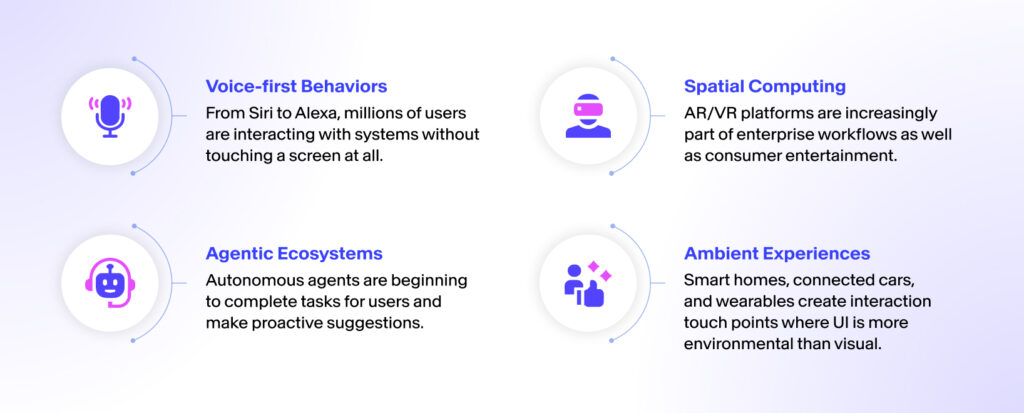
- Voice-first behaviors: From Siri to Alexa, millions of users are interacting with systems without touching a screen at all.
- Agentic ecosystems: Autonomous agents are beginning to complete tasks for users and make proactive suggestions.
- Spatial computing: AR/VR platforms are increasingly part of enterprise workflows as well as consumer entertainment.
- Ambient experiences: Smart homes, connected cars, and wearables create interaction touchpoints where UI is more environmental than visual.
Designing Human–AI Systems
Consider personal finance. A mobile-first product might notify a user of a low balance. A human–AI interaction system, on the other hand, could automatically transfer funds (if granted permissions), negotiate repayment options, adjust EMI options for maximum savings, or recommend spending adjustments.
Designers in this context aren’t crafting screens; they’re building trust frameworks. They now need to think about:
- How do we design experiences that make smart decisions transparent and trustworthy?
- How do we ensure users feel in control without being burdened by constant prompts?
- How do we embed ethics into interfaces where default settings may shape life-altering outcomes?
“When systems act on your behalf, the design challenge is no longer usability—it’s credibility.”
— Deekshit Sebastian, Design Studio Head at Think Design
Designing Human Experience with a New Lens
Mobile-first design was largely about user experience (UX): task efficiency, intuitive flows, and visual clarity. Post-mobile systems, however, demand a broader lens—human experience (HX).
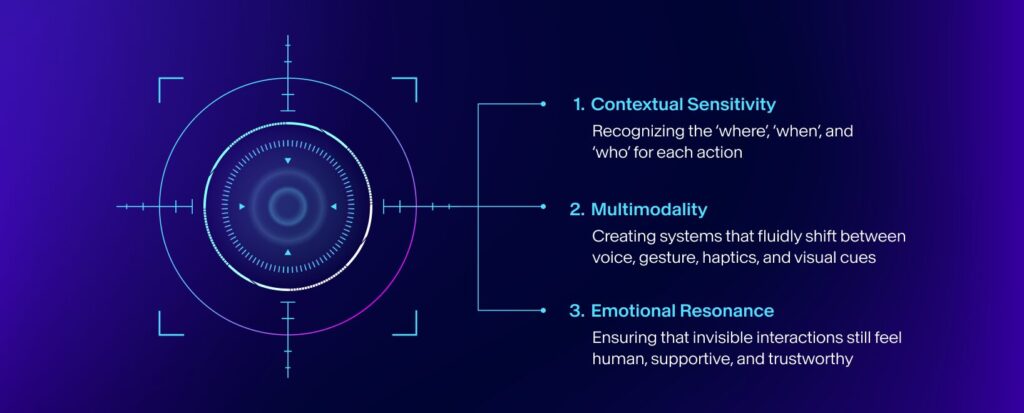
- Contextual Sensitivity: Recognizing the ‘where’, ‘when’, and ‘who’ for each action
- Multimodality: Creating systems that fluidly shift between voice, gesture, haptics, and visual cues
- Emotional Resonance: Ensuring that invisible interactions still feel human, supportive, and trustworthy
Preparing for the Next Paradigm: Three Shifts in Design Thinking
To prepare for post-mobile design, organizations must undergo mindset shifts at both strategic and operational levels, especially leaders and strategists.
1. Shift Strategy From Features to Ecosystems
Mobile-first design encouraged organizations to think in terms of apps, that is, self-contained experiences. Post-mobile demands ecosystem thinking. Interactions will no longer live in one app or device but across a constellation of connected agents, services, and environments. For instance, a smart system allows users to change their home environment from their phones anywhere in the world. Hence, the new design challenge is ensuring continuity with respect to design and contexts across devices.
2. Shift Strategy From Interaction to Anticipation
Where mobile design is optimized for fewer clicks and rapid engagement, post-mobile design optimizes for fewer decisions. Systems will increasingly anticipate needs and act preemptively. This doesn’t mean predicting every move; it simply means designing systems that read intent signals and respond in ways that feel natural. This includes paying closer attention to user location, past behavior, and contexts.
3. Shift Strategy From UI to Protocols
Designers must now shape experience protocols, which are standardized ways for systems to behave consistently across contexts. This is less about style guides and more about trust architectures. For example, how agents communicate with one another, how data is shared across ecosystems, and how transparency is maintained in invisible interactions.
How Ethics Fit in the Post-Mobile Paradigm
When interfaces become invisible, accountability risks becoming invisible too. So, with the new shift in the industries, changes in ethical design are non-negotiable. We’ll see an increasing focus on the following:
1. Explainability
Users must understand why a system took action, even if the action was beneficial.
2. Consent
Rather than one-time acceptance, users need ongoing opportunities to change the way they delegate responsibilities to systems.
3. Bias Mitigation
Invisible interactions can easily be driven by systemic bias. Ethical reviews need to be an integral part of usability testing.