
2D Density Plot
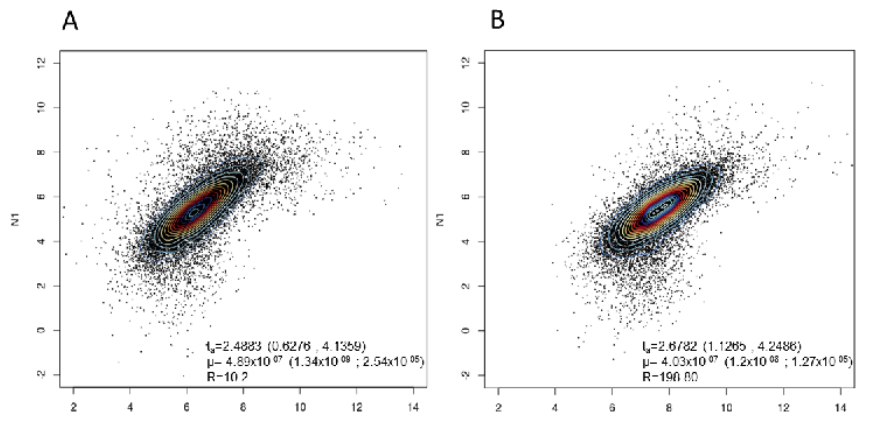
History of Density 2D Plot A density plot is a smoothed, continuous version of a histogram, estimated from data using kernel density estimation (KDE). In a 2d kernel density plot, a continuous curve called a kernel is drawn at each individual data point. These curves are then summed to produce a single smooth density estimation. […]
Scatterplot
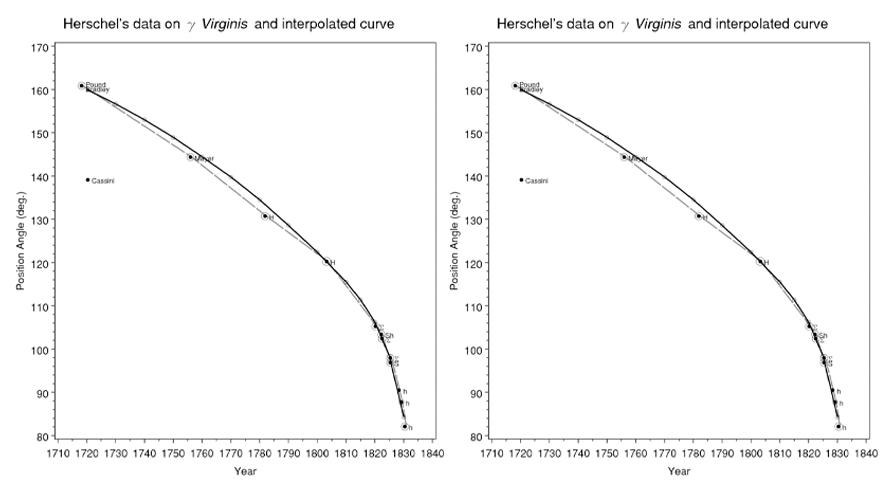
History of Scatterplot Statistician Edward Tufte notes scatterplots comprise over 70% of scientific publication charts. The first appeared in 1833 by John Frederick W. Herschel, plotting double star positional angles against measurement year to uncover orbital relationships, not mere trends. Herschel’s data on the orbits of Virginis, together with his eye-smoothed, interpolated curve (solid line, […]
Histogram
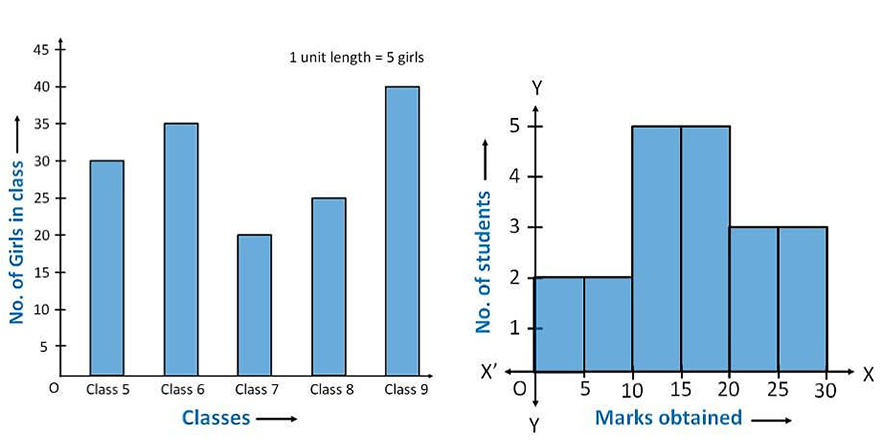
History of Histogram Karl Pearson, a pioneering English mathematician and statistician, introduced the term “histogram” in 1891. He developed this statistical tool to represent continuous data through a diagram like a bar chart. Pearson envisioned histograms as a “historical diagram” meant to chart temporal data such as historical time periods, which inspired the name deriving […]
Hexbin
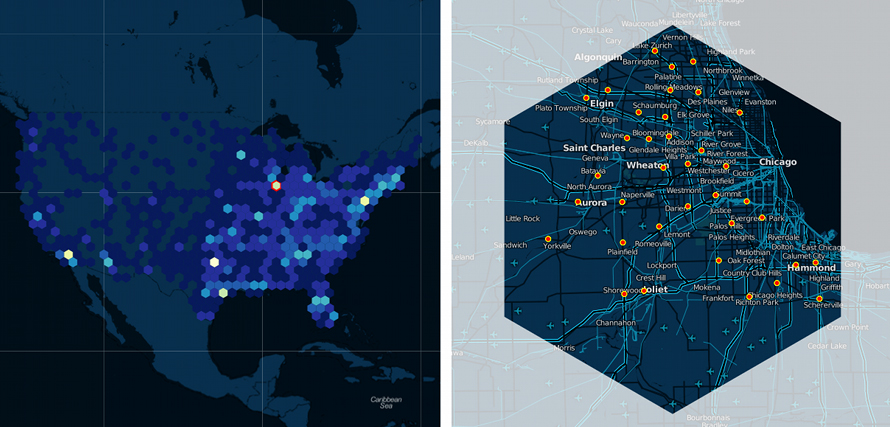
History of Hexbin Visualization Hexbin visualization was first introduced in a 1987 paper by statisticians D.B. Carr and colleagues as a technique to represent two-dimensional data by dividing the space into hexagonal bins and counting data points within each bin. Hexagonal binning was chosen over traditional square bins due to its ability to better capture […]
Heatmap
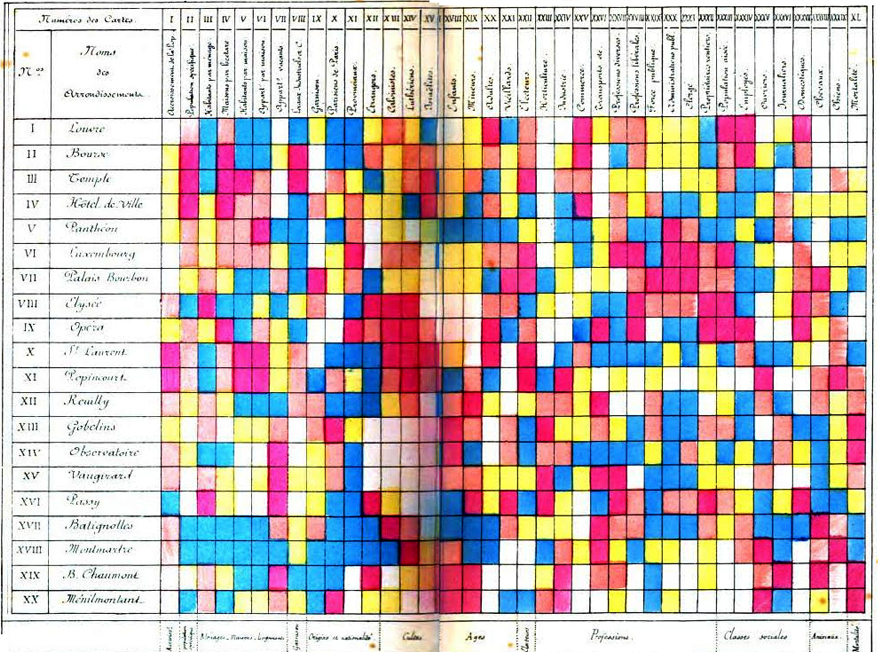
Heatmaps are commonly used as isopleth-style displays to represent regions or areas of similar value using continuous color gradients or colour “splotches.” In digital product contexts, heatmap analysis is widely used to understand user interaction with interfaces, making complex behaviour data self-explanatory for designers, product teams, and business stakeholders. History of Heatmap Heat maps originated […]
Choropleth
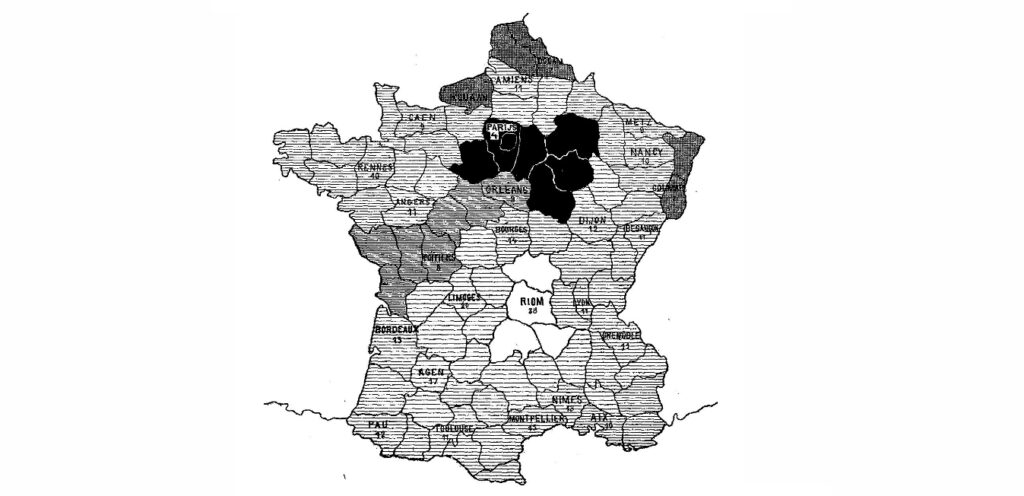
History of Choropleth The history of the choropleth map dates back to 1826, when Charles Dupin created the first one to depict literacy levels by department in France. These early visualizations were called “cartes teintées” or color maps. The term “choropleth” was introduced in the mid-20th century by John Kirtland Wright of the American Geographical […]